Configuring Alerts
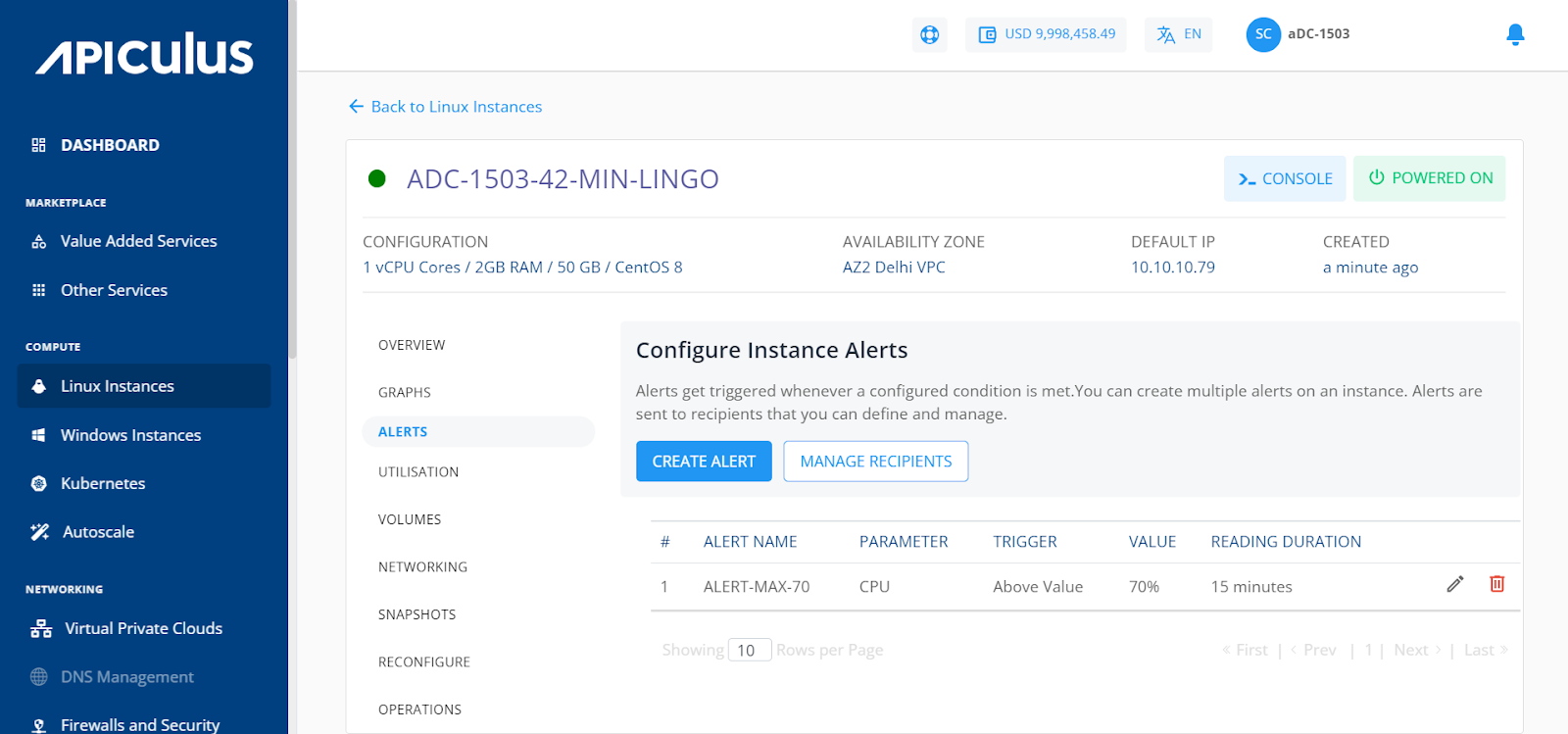
To view the configured alerts or configure new ones, navigate to the Operating Linux Instances, and select Linux Instance and access the Alerts tab.
Alerts get triggered whenever a configured condition is met. You can create multiple alerts on an instance. Alerts are sent to recipients that you can define and manage.
You can configure alerts for instances running on the Apiculus. You can define alerts for Instances and configure the email recipients for these alerts using a straightforward and easy-to-use interface.
Instance Alerts
The Alerts tab lists all the alerts already configured for that particular Linux Instance. In addition, it shows the following details:
- Name for the alert
- Parameter
- Trigger When
- Value
- Reading Duration
Adding an Alert
To create or add alerts, click the Create Alert button. The following window appears:.
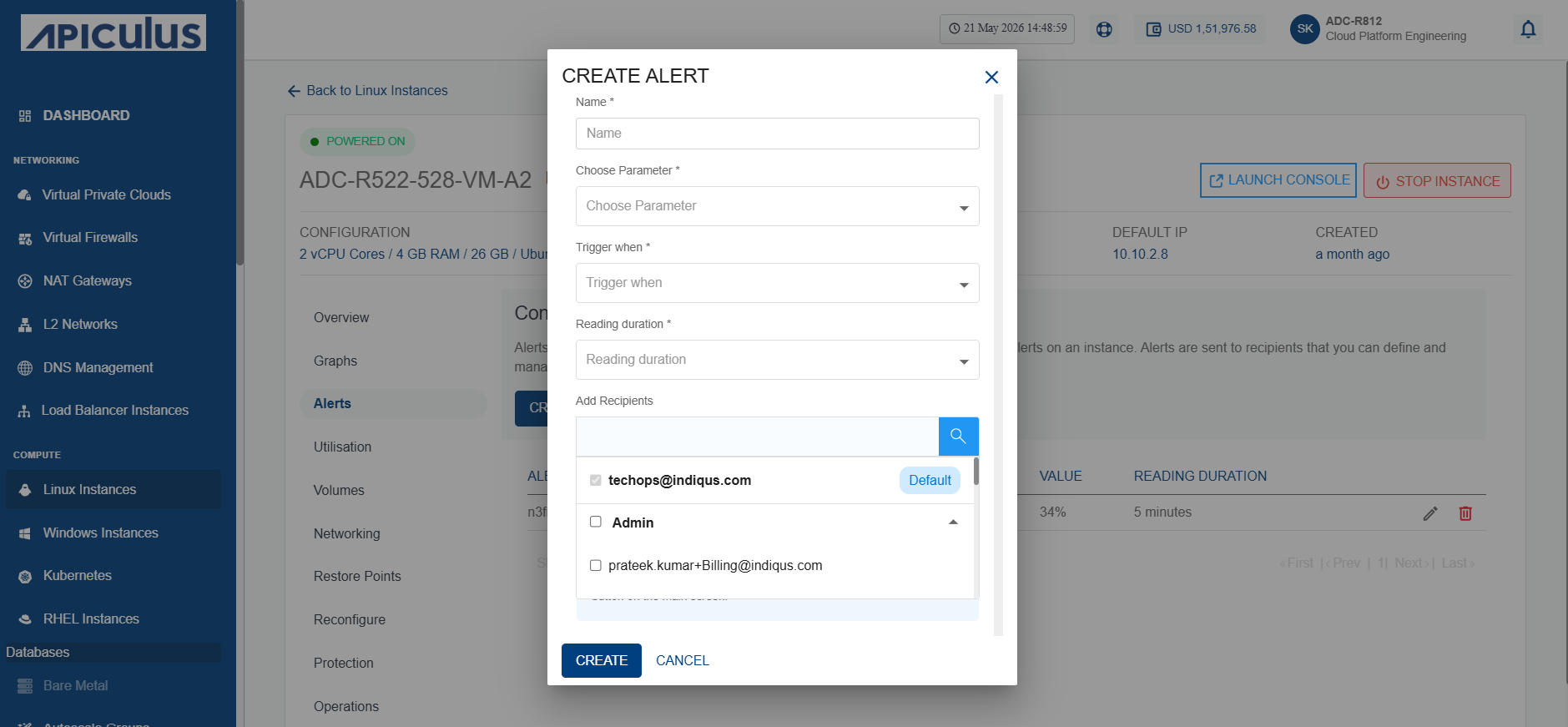
To create an alert, provide the following details:
- Name - Provide the name for your alert.
- Choose Parameter - This option allows you to define what parameter needs to be monitored to trigger the alert email. Apiculus Cloud supports CPU, RAM, Disk, 1-min Load Average, 5-min Load Average, 15-min Load Average parameters.
- Trigger when - This set of options lets you define whether to trigger above or below a custom value.
- Reading duration - This option lets you define the breach window, that is, the duration for which the breach must be consistent to trigger the alert email.
- Add Recipients - This option lets you add recipients from the dropdown.
Configuring Recipients
You can delete the existing email IDs and add other email IDs by following these steps:
- Click on the Manage Recipients.
- Click on + Add Recipients.
- Select the recipients from the dropdown.
- Click the Update button.
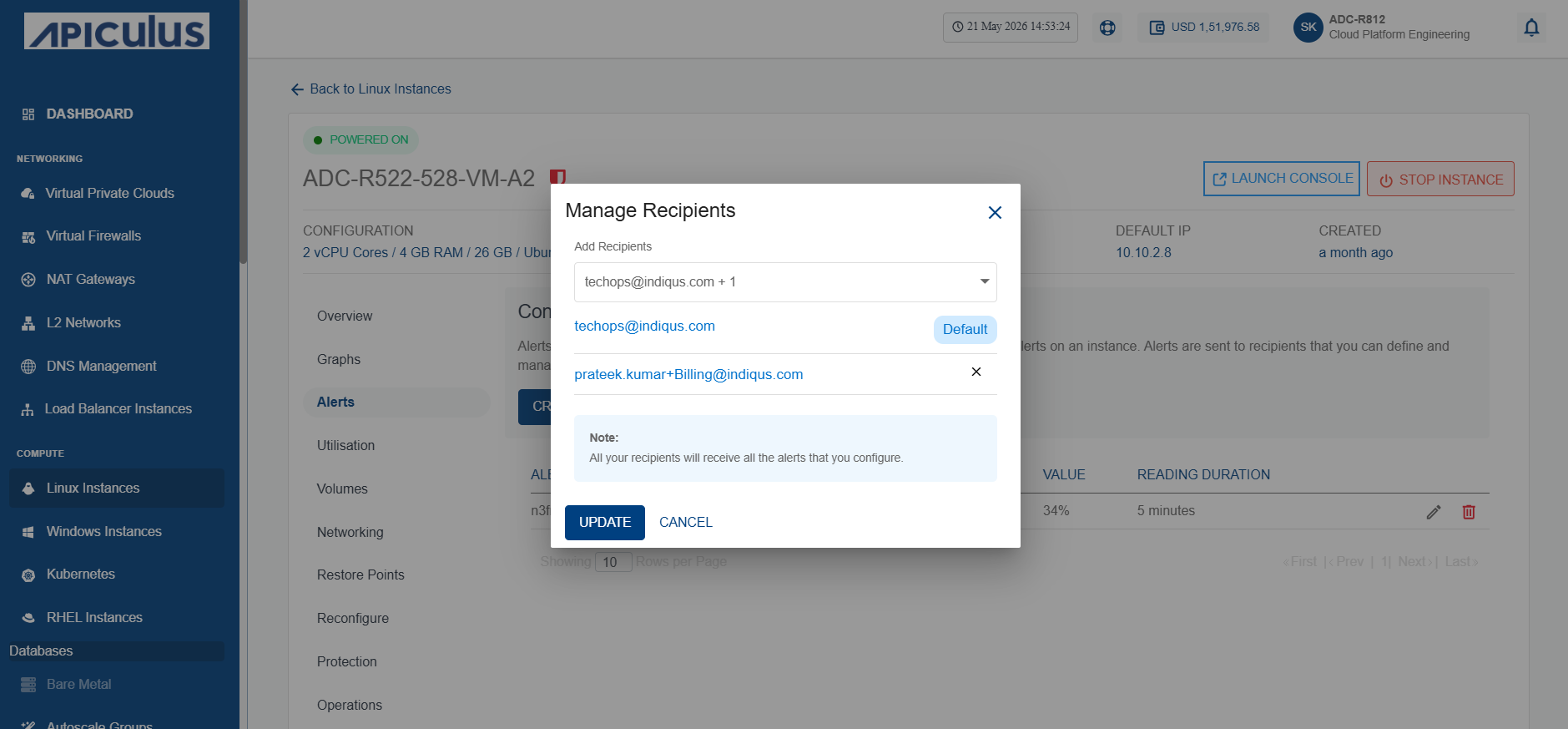
All the recipients will receive all the setup alerts. If no email ID is added, no email will be sent for the already configured alerts.